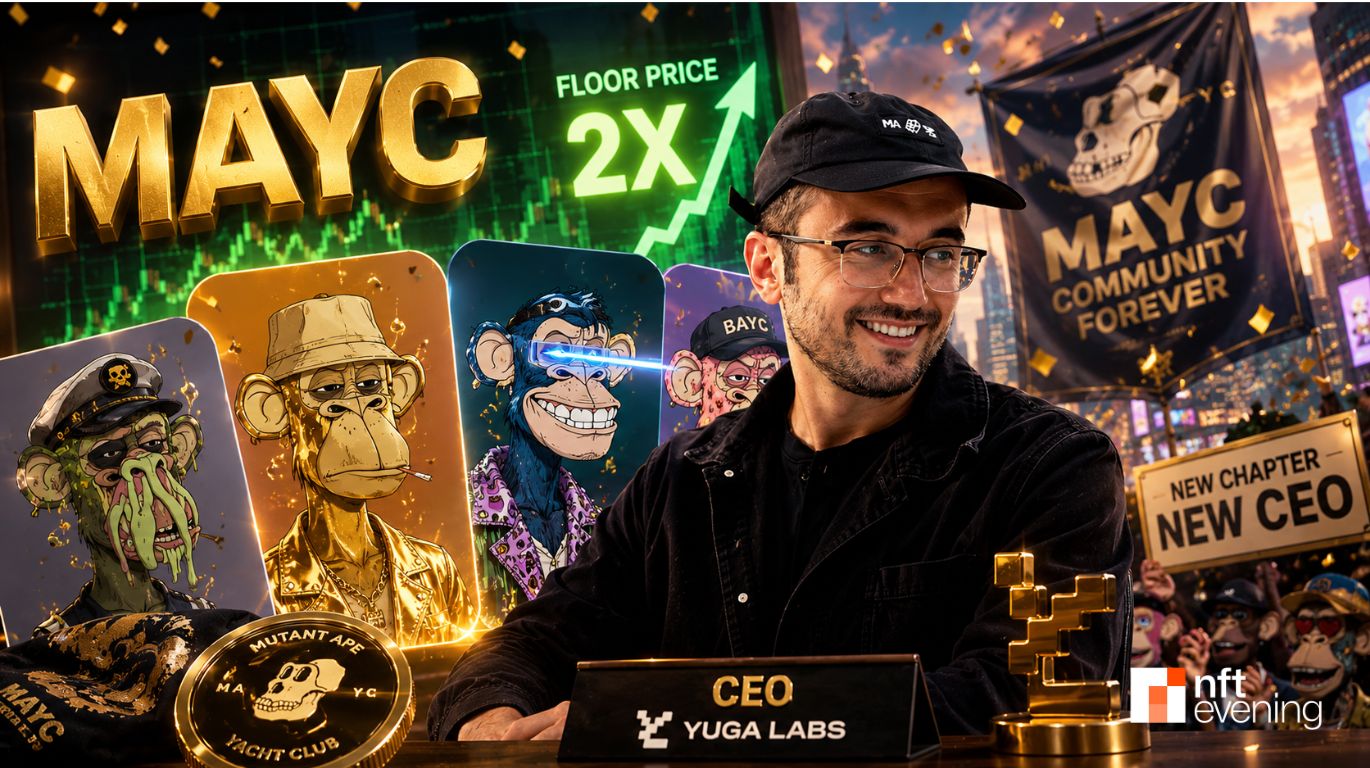
Bored Ape Yacht Club (BAYC) is recording its strongest recovery since the NFT bear market, with its floor price rising to nearly 10 ETH in just one month. Yuga Labs’ new CEO, Michael Figge, believes that the NFT market was “oversold” after a years-long crash.
The holder data now partially support this view. Although BAYC has lost over 90% of its value compared to its 2022 peak, the collection has maintained a stable holder base and a low listed supply — a sign that most long-term holders have not actually left the market.
BAYC Finds Buyers Again
After months of sluggish trading, BAYC is returning to the NFT market’s spotlight.Data from OpenSea shows the floor price is currently hovering around 9.8 ETH, nearly double its bottom from last month.

BAYC OpenSea metrics. Source: OpenSea
Trading volume has also surged significantly in recent weeks, coinciding with a partial return of capital to the blue-chip NFT market, such as CryptoPunks and Pudgy Penguins. ApeCoin recovered over the same period, suggesting the market is beginning to reprice the Yuga Labs ecosystem after a prolonged sell-off.
However, the current recovery remains largely concentrated in large, high-liquidity collections. The rest of the NFT market has yet to show similar levels of activity compared to the 2021–2022 bull run.
Yuga’s New CEO Wants to Reframe NFTs
On April 17, Greg Solano announced his departure from the CEO position to transition into the role of Chairman of the Board, while appointing Michael Figge as the company’s new CEO. Solano stated that Figge will oversee Yuga’s next growth phase, especially following his involvement in operating the Otherside project.
Some news to share:
After serving as CEO the past couple years, I’m moving into the role of Chairman of the Board, and @mfigge will become Yuga’s next CEO.
Figge is the absolute best person for the job. There’s no one I trust more to lead Yuga through this next chapter.
He’s…
— Garga.eth (Greg Solano) (@CryptoGarga) April 16, 2026
In a post on X, he described BAYC as a “club” and emphasized elements such as IRL experiences, storytelling, and style.
This approach indicates that Yuga is attempting to steer BAYC away from the speculative narrative that previously dominated the NFT market. Instead of solely focusing on scarcity or flipping culture, the company aims to turn this collection into a form of digital membership tied to identity and community.
This is also why Figge argues that the NFT market was “oversold.” NFT prices may have collapsed much faster than the actual weakening of the holder community.
Holder Data Tells a Different Story
Marketplace data currently shows that BAYC’s holder base remains relatively stable after years of market downturn.
OpenSea records that BAYC currently has approximately 5,609 unique holders out of a total supply of nearly 10,000 NFTs. The listed supply is also only around 3.4%, showing that the amount of NFTs being put up on the marketplace remains relatively small compared to the total supply.
In the NFT market, even a small number of listings can drag the floor price down sharply during a downtrend, as liquidity is inherently much thinner than that of conventional crypto assets.
Data from CryptoSlam also indicates that activity is improving again. BAYC trading volume in April reached approximately $10.1 million, a sharp increase compared to about $1.3 million the previous month.
These signals are not yet enough to confirm that the NFT market has fully recovered, but they suggest that the decline of blue-chip NFTs may have been steeper than the actual changes within the holder community.
NFTs Are Still a Narrow Market
Despite BAYC’s strong recovery, NFT capital flows remain mostly concentrated in a handful of blue-chip collections with high liquidity and brands large enough to sustain market attention during the downturn.
While BAYC, CryptoPunks, or Pudgy Penguins record a resurgence in activity, many NFT projects that were prominent in the previous cycle still see almost no significant volume. Data from CryptoSlam shows that total market volume is still far below its peak during the 2021–2022 period, while the number of active traders has not yet returned to previous levels.
This suggests that the current rebound resembles a blue-chip rotation rather than a uniform return of the NFT market. Liquidity is concentrating on a few collections that still retain cultural relevance and a stable, active community after years of market contraction.
Yuga’s Bigger Test Starts Now
Yuga Labs’ new strategy will not be judged solely by BAYC’s floor price.
What Figge mentioned — from IRL experiences to storytelling and Otherside — shows that Yuga is trying to push BAYC out of its role as a collection primarily traded according to market cycles.
What Yuga still needs to prove is that these directions can generate real activity for BAYC, rather than just helping the collection recover during periods of market excitement.