The cryptocurrency market is facing renewed pressure in 2026 as war tensions involving Iran show no signs of easing, triggering energy shocks and shifting global monetary policy expectations. Brent crude prices surged from around $70 to over $110 per barrel in March before easing to the $95–$100 range, while the market has now largely priced out expectations for Fed rate cuts in the near future. Consequently, capital flows into risk assets, such as cryptocurrencies, have been significantly impacted, slowing the market recovery that was previously anticipated.
Iran war impact spilling into global markets
The impact of these conflicts is felt not only in Middle Eastern markets but is also rippling through global markets and reflecting clearly across financial sectors. Oil prices serve as the most evident signal. From the $60-$70 range at the start of the year, Brent rose steadily, surpassing $110 per barrel in March before adjusting to around $97 at present.

Brent Oil Price Chart (1D). Source: TradingView
The International Monetary Fund (IMF) has also warned that the conflict in the Middle East is spreading its impact globally through energy prices, supply chains, and financial conditions. According to the IMF, approximately 25–30% of global oil supply and 20% of global LNG pass through the Strait of Hormuz, making this shock a potential catalyst for higher inflation and slower growth.
Meanwhile, the US Dollar has recorded a similar market reaction. The DXY index climbed above the 100 mark in March before slightly retreating to around 98–99, indicating a trend of capital returning to safe-haven assets—a common occurrence during periods of economic instability.
The crypto market is not exempt from this influence. Bitcoin fell sharply from its previous peak of nearly $98,000 and is currently fluctuating between $60,000–$75,000, reflecting pressure from the changing macroeconomic environment.
From energy crisis to liquidity squeeze
The conflict’s impact on crypto does not occur directly but rather through macroeconomic factors, specifically inflation and monetary policy.
As oil prices rise, energy and transportation costs follow suit, putting pressure on global inflation. In a context where inflation is not yet fully under control, this shock forces central banks to be more cautious regarding policy easing.
This is clearly reflected in market expectations. According to data from CME FedWatch, the probability of the Fed holding interest rates steady at the late April meeting stands at 99.5%, while there are virtually no expectations for a rate cut in Q2.
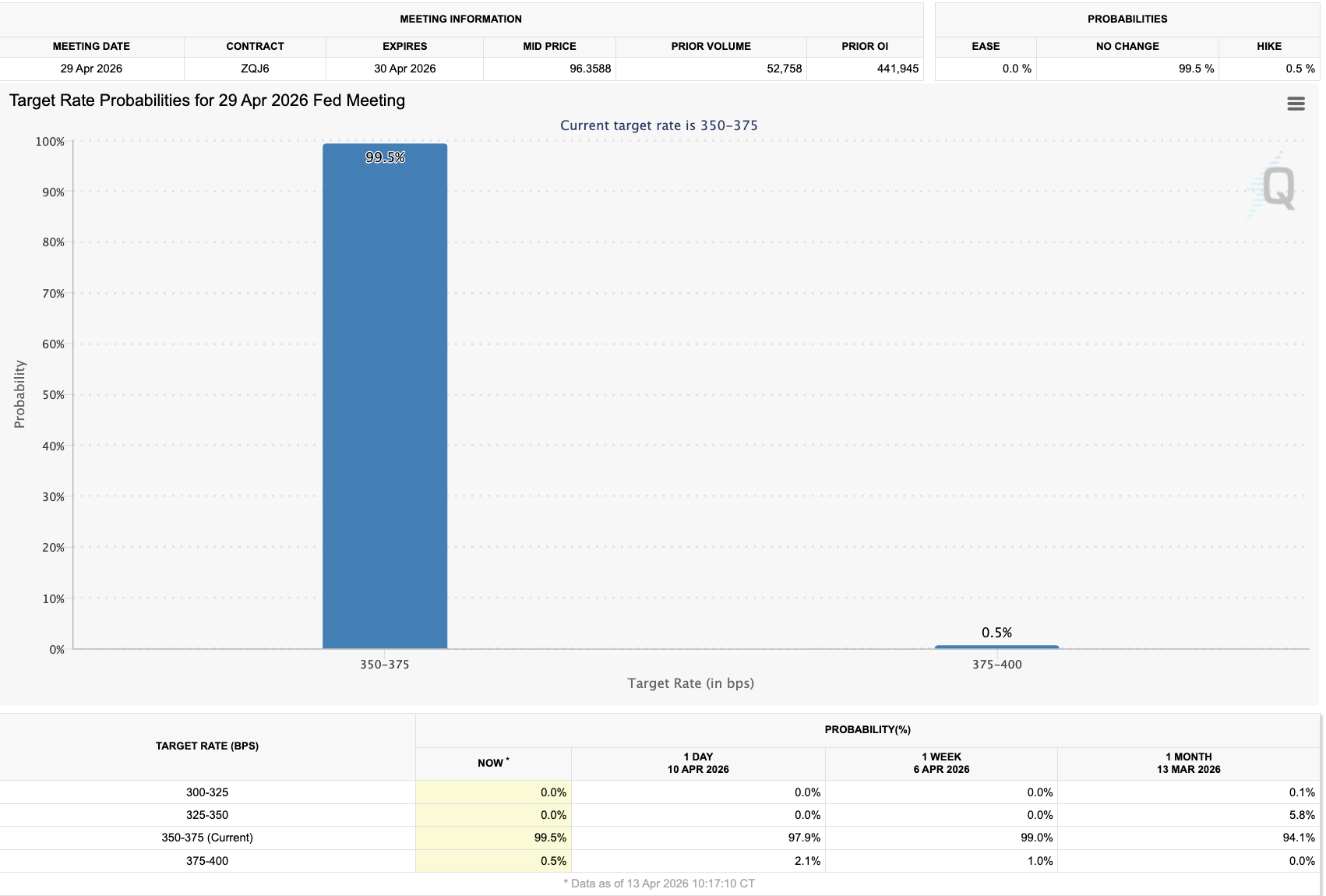
Fed rate expectations. Source: CME FedWatch
Delaying rate cuts means global liquidity will continue to be squeezed longer than expected. This is a critical factor for crypto, as capital flows into risk assets typically increase when interest rates are low and contract when rates remain high.
In previous phases, expectations that the Fed would soon cut rates were a primary driver supporting the market’s upward momentum. However, given current developments, investors are recalibrating their positions and becoming more cautious with risk assets.
Crypto reacts: volatility without direction
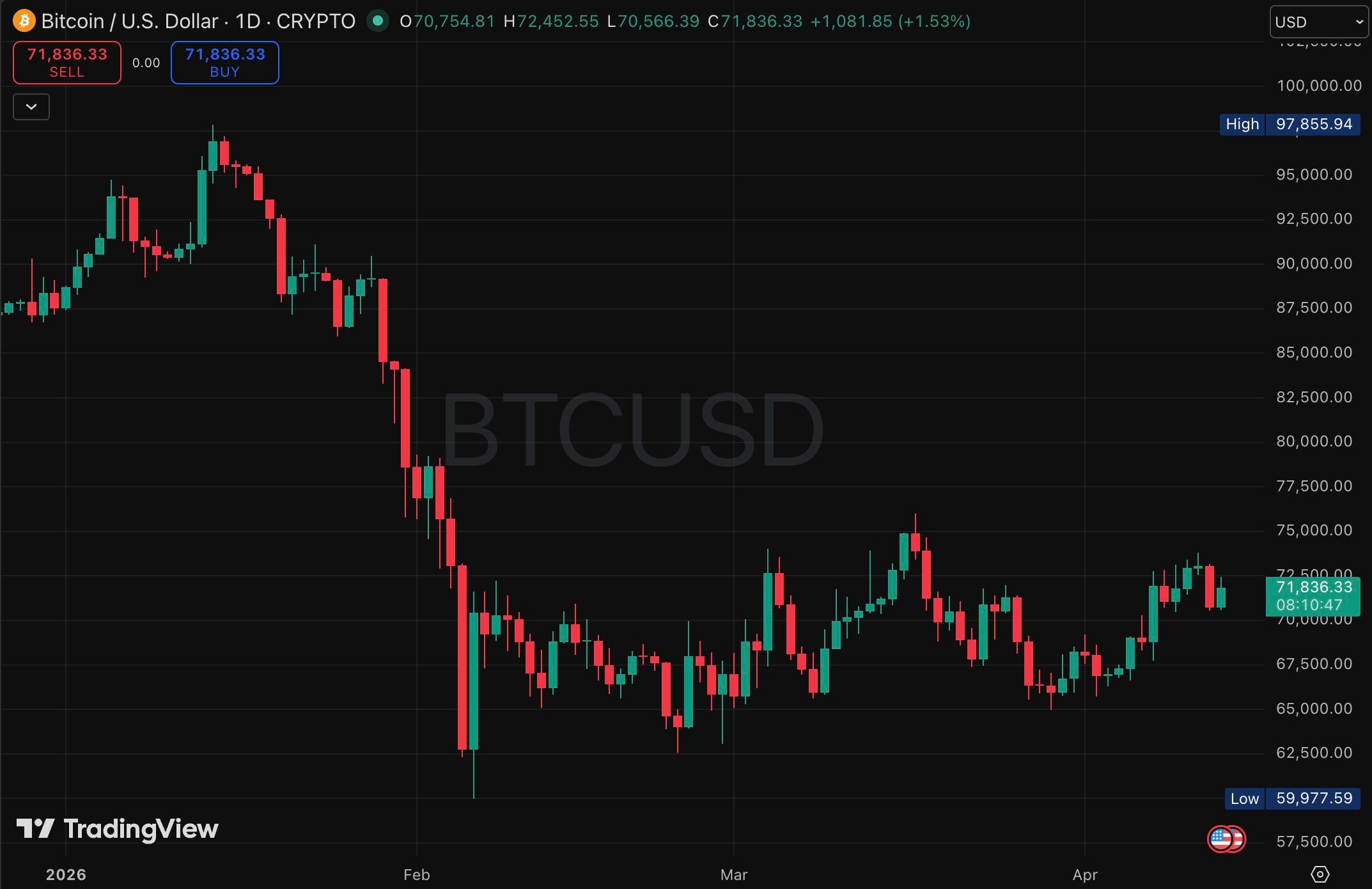
BTC price chart (1D). Source: TradingView
Bitcoin is currently trading in a wide range from approximately $60,000 to $75,000, following a sharp correction of nearly 30% from its previous peak near $98,000. Upswings and downswings occur rapidly but without creating a clear breakout, indicating the market is in a state of accumulation and lacks momentum.
On the Altcoin side, the pressure is even more pronounced. Many assets have recorded deeper declines than Bitcoin during correction phases, while speculative capital flows have weakened significantly. This reflects a “risk-off” sentiment, as investors limit exposure to high-volatility assets.
Notably, crypto is increasingly trading in tandem with traditional risk assets. When the USD rises, and rate expectations remain high, capital tends to exit crypto rather than seeking it out as a refuge.
A delayed recovery, not a derailed cycle
Despite heavy pressure from macroeconomic factors, current developments do not suggest that the crypto bull cycle has ended. Instead, the market shows signs of entering a more prolonged accumulation phase. The fact that Bitcoin remains above the $60,000 mark indicates that buying support still exists, though it is not yet strong enough to push prices to new highs.
Compared to previous expectations, the BTC recovery timeline is being extended. Many earlier forecasts expected Bitcoin could soon return to the $90,000 range in 2026; however, this outlook now depends more heavily on macroeconomic shifts.
A key change in this cycle is that the relationship between crypto and traditional financial markets has tightened more than ever before. The participation of institutional capital makes the crypto market more sensitive to interest rates and liquidity, rather than operating independently as in previous cycles.
This also means that when macroeconomic conditions improve—such as declining inflation and the Fed beginning to ease—crypto could still recover strongly. However, within the current geopolitical context, that process is likely to occur more slowly than initially hoped.
What could shift the trajectory?
The remainder of 2026 will depend on several key factors that could determine the market’s recovery potential. One of the most critical factors is the potential de-escalation of tensions in the Middle East.
If tensions cool and oil supply risks subside, energy prices could stabilize, thereby easing inflationary pressure. This would create conditions for central banks to return to a policy-easing roadmap.
Furthermore, Fed policy will play a decisive role. Any signal suggesting the possibility of an earlier-than-expected rate cut could serve as a catalyst for the crypto market. Conversely, if oil prices remain high and elevated inflation persists, it may force the Fed to delay rate cuts even longer, keeping liquidity restricted.
Additionally, capital flows from ETFs, the actions of large institutions, or regulatory issues still play an important role. However, these factors are unlikely to reverse the trend while the macroeconomic situation remains unfavorable.
Conclusion
Conflicts involving Iran are becoming one of the most significant macroeconomic factors dominating global financial markets in 2026. The oil price shock and inflationary pressure are shifting monetary policy expectations and prolonging the state of tightened liquidity.
For the crypto market, this does not mean the bull cycle is over, but rather reflects a delay in the recovery process, as capital has yet to return clearly amidst high interest rates.
Developments in energy prices and monetary policy will continue to be critical variables shaping liquidity and the direction of the crypto market throughout 2026.