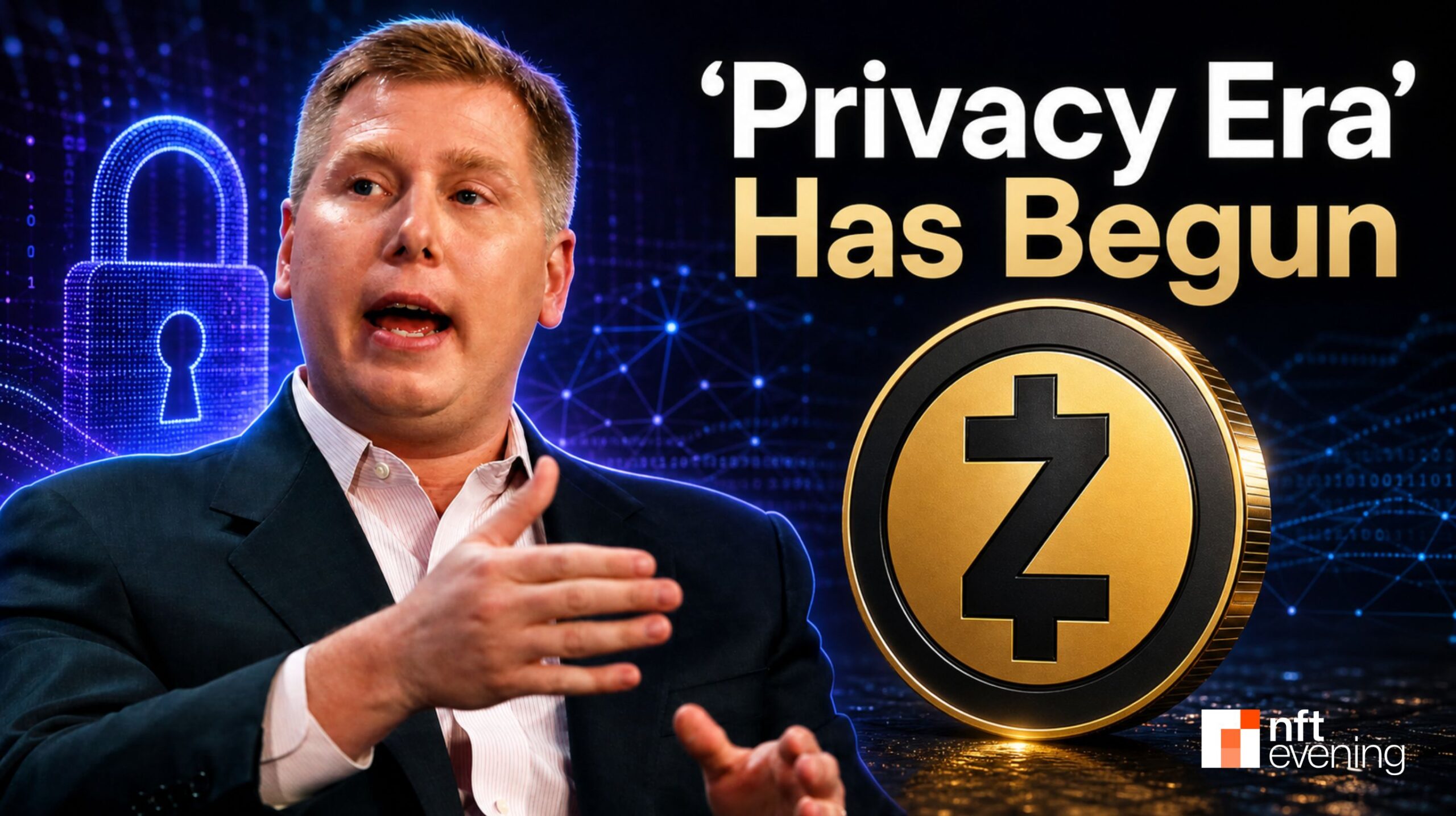
Barry Silbert is continuing to bring privacy coins back into the crypto market’s spotlight. In an X post on May 25, the chairman of Grayscale Investments said the “privacy” era in crypto has officially begun. The comment was made against the backdrop of a sharp increase in Zcash (ZEC), while the group of tokens focused on privacy is being revalued by investors after years of under pressure from low liquidity and regulatory risks.
Silbert Revives Privacy Coin Thesis
The tweet on May 25 is not the first time Silbert has pushed the privacy coins narrative. At Bitcoin Investor Week back in February, he said privacy-focused crypto could become an asymmetric opportunity, and estimated that 5%-10% of the capital currently in Bitcoin could shift into assets like Zcash over the next few years.
Privacy has returned as a notable topic as crypto moves closer to the traditional financial system. Bitcoin ETFs, stablecoins, and digital asset investment products help expand the market but also introduce additional layers of surveillance, on-chain analysis, and compliance requirements. That context makes Zcash look at again as part of the debate over financial privacy.
Zcash Leads Sector Rally
Zcash is currently the focus of the revival in the privacy coins group. According to CoinGecko on May 27, ZEC is trading around 573 USD, with a market capitalization of about 9.56 billion USD. This token decreased by about 6%-8% in the last 24 hours at the time the data was recorded, but still increased by more than 60% in 30 days, putting Zcash into the group of the most outstanding assets in the sector.
The total market capitalization of the privacy coins group is currently around 17.3 billion USD, with a 24-hour trading volume of about 1.05 billion USD, according to CoinGecko. This scale is still small compared to Bitcoin or Ethereum, but it has been enough for privacy coins to return as a sector with significant liquidity, instead of just a niche narrative.
Monero (XMR), the oldest privacy coin in the group, remains the main point of comparison with Zcash. According to CoinGecko, XMR is trading around 387 USD, with a market capitalization of about 7.14 billion USD. Unlike Monero, where privacy is set as the default, Zcash uses an optional privacy model, allowing users to choose transparent or shielded transactions. This partly helps ZEC be easier for exchanges and investment products to handle amid tightening compliance requirements.
The Bitcoin Rotation Argument
The number that caught the market’s attention is 5%-10%. With Bitcoin’s market capitalization around 1.5 trillion USD, this range is equivalent to about 75-150 billion USD, many times larger than the current total market capitalization of the privacy coins group.
But this calculation does not mean 75-150 billion USD will directly flow into ZEC or XMR. Bitcoin’s market capitalization is not an amount of cash that can be instantly moved between assets, while the market cap of a small sector can fluctuate strongly even if the actual capital flow is much lower.
The point Silbert wants to emphasize is the scale gap between Bitcoin and privacy coins. While the entire privacy sector is still only around 17.3 billion USD, ZEC becomes the most visible proxy for investors who want to trade this narrative.
Why Investors Are Watching Zcash
Zcash has a maximum supply of 21 million ZEC, similar to Bitcoin, but is built with an extra layer of privacy using zero-knowledge proofs. This mechanism allows users to perform shielded transactions, while the network still supports transparent transactions. For many traders, that is the reason why ZEC is seen as a “Bitcoin-like” asset but with an added privacy factor.

Grayscale Zcash Trust.
Grayscale Zcash Trust is also a part of the story. According to Grayscale, this Trust is designed so that investors can gain exposure to ZEC without having to directly buy, store, or protect the token. This is important against the backdrop that many privacy coins still depend almost entirely on spot liquidity on crypto exchanges.
Previously, Arthur Hayes once revealed that ZEC was the second-largest crypto asset in the portfolio of Maelstrom, the crypto family office managed by him. Although this comment appeared at the end of 2025 and is not a new catalyst, it shows that Zcash had been noticed by some influential figures in the industry before the current rally.
Regulatory Pressure Remains
The biggest risk for privacy coins remains regulation. Binance once announced the delisting of Monero (XMR) in February 2024, an example showing that default anonymous assets can face greater pressure from the compliance requirements of exchanges. In the EU, MiCA also tightens the listing of assets with built-in anonymity functions, unless the service provider can identify the owner and transaction history.
Zcash faces these requirements less directly than Monero because privacy is optional, not the default. However, regulatory pressure remains a major limit for the privacy coins group, especially if exchanges continue to tighten listing standards for assets with anonymity features.
The Test for Silbert’s Privacy Call
The next phase of privacy coins will depend on whether this sector can maintain liquidity, expand access for institutional investors, and avoid further listing pressure from major exchanges. Zcash currently has an advantage because the market narrative is converging around it, from Silbert’s statements to price performance and Grayscale’s products.
But for privacy to become a more sustainable theme than a short-term trading round, the market will need to see more real-world use demand with shielded transactions, more stable capital flows, and a compliance approach clear enough for large investors.