Bitcoin (BTC) surged nearly 2% and broke above $85,000 during the September 30 session, after U.S. economic data showed lower-than-expected inflation while growth remained solid. These signals initially eased interest rate pressure and supported sentiment toward risky assets like BTC. However, the price later pulled back below $85,000 as selling pressure emerged at the resistance zone, leaving the rally’s durability yet to be tested.
Bitcoin Breaks Above $85,000
Bitcoin traded below $84,000 before the release of the U.S. August PCE index and the third estimate of Q2 GDP at 8:30 a.m. Eastern Time on September 30. BTC then rose sharply past $85,000 and touched an intraday high of $85,600.
This price level remains lower than the September peak of $87,374, set on September 22. Bitcoin had fallen below $83,000 in the following week, so the September 30 gain only recovered a portion of the correction rather than breaking the price out of its recent range.
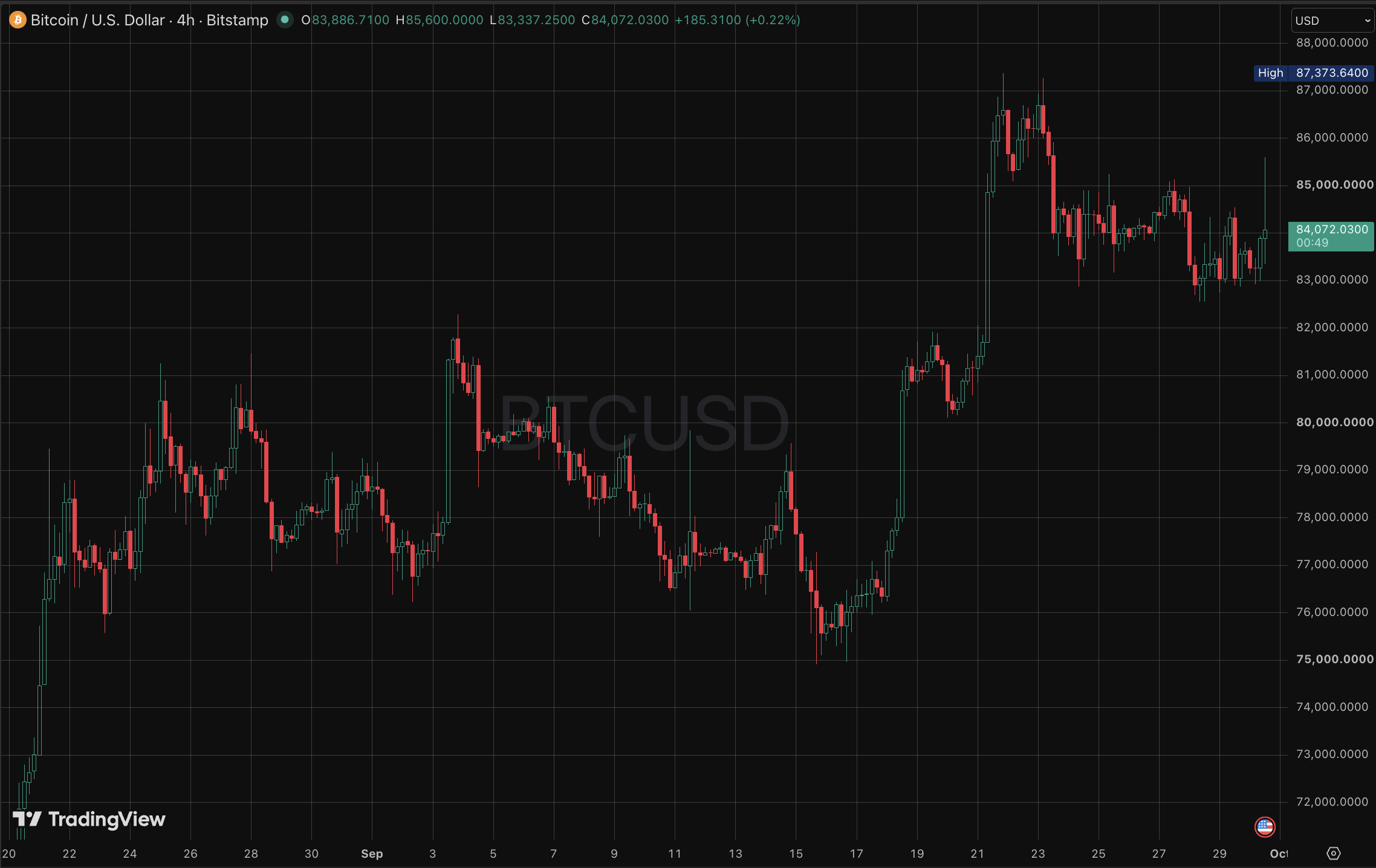
Bitcoin Price Chart (4h). Source: TradingView
The upward momentum quickly narrowed, bringing Bitcoin back to trade around $84,000 in the following hours. Most of the post-data gains were thus erased before the U.S. session ended.
U.S. Data Delivers a Goldilocks Mix
U.S. economic reports released on September 30 showed August PCE inflation was lower than expected, while Q2 GDP growth was revised sharply upward and September private employment surpassed expectations.
According to the U.S. Bureau of Economic Analysis, the PCE price index rose 3.4% in August year-over-year, lower than the 3.7% forecast and down from 3.7% in July. Core PCE, which excludes food and energy, increased 0.2% month-over-month and 3.0% year-over-year, both below forecasts of 0.3% and 3.3%, respectively. Core PCE is one of the inflation measures closely tracked by the Fed when planning monetary policy.
At the same time, real U.S. GDP growth in the second quarter was revised up to an annualized rate of 2.2%, from the previous estimate of 1.5%. Consumer spending rose 3.8% at an annualized pace, indicating that domestic demand continued to support the economy.
The ADP employment report released the same day showed the U.S. private sector added 90,000 jobs in September, exceeding the forecast of 70,000 in a Reuters poll. Although lower than forecasted, Core PCE remains above the Fed’s 2% inflation target.
Why the Data Lifted Bitcoin
Lower-than-expected PCE eased concerns that the Fed would continue to raise interest rates. Treasury yields cooled down and the U.S. dollar weakened following the report, thereby supporting Bitcoin and other risk assets.
U.S. equities also moved higher after the data, with the Nasdaq Composite up about 0.9% and the S&P 500 up 0.5% by mid-morning in New York. The simultaneous response across multiple markets indicates that Bitcoin rose in line with the general improvement in risk sentiment, rather than due to a specific catalyst from the crypto sector.
The Fed had also just raised interest rates by 25 basis points to 3.75% – 4.00% on September 16, while strong GDP and hiring allow the central bank to maintain tight policy for longer. Therefore, Bitcoin’s rally reflects short-term relief in interest rate pressure, not yet a firm signal that the Fed is about to pivot to rate cuts.
Can Bitcoin Hold the Breakout?
Bitcoin needs to maintain above $85,000 to confirm that the rally has broken out of the late-September range. The quick pullback below this mark suggests that the breakout has not yet been consolidated. If BTC reclaims the $85,600 area, the September peak near $87,374 will be the next threshold; conversely, a decline below $83,000 could weaken the recovery structure.
Capital inflows into spot Bitcoin ETFs in the U.S. continue to serve as a supporting factor. According to Farside Investors, the funds recorded nearly $2.39 billion in net inflows from September 21 to 25. Inflows subsequently slowed to $31 million on September 28 and $66.2 million on September 29, indicating that ETF demand remains positive but has slowed significantly compared to the previous week.
Markets will next watch the U.S. September jobs report, scheduled to be released by the Bureau of Labor Statistics at 8:30 a.m. Eastern Time on October 2. Figures on job growth, unemployment, and wages could alter rate expectations, thereby impacting bond yields, the U.S. dollar, and Bitcoin’s ability to reclaim $85,000.